
Tool Design for AI Agents
Overview
Tools are nodes connected to the AI Agent that perform specific actions or return data. They must be well-defined so the agent can use them reliably.
Naming
Agents refer to tools by their node names. Use clear, descriptive names that directly reflect the purpose of the tool.
✅ Good:
create_event_toolsend_email_draftretrieve_calendar_tool
❌ Poor:
Node 3tempTooldoStuff
Tool names are a key part of the agent's reasoning. If the name doesn’t convey the purpose, the agent may ignore or misuse the tool.
Behavior Guidelines
- Tools should be deterministic and return consistent results
- If the tool performs irreversible actions (e.g. sending an email, booking a meeting), ensure that the agent logic confirms intent before calling it
- Tools should return helpful errors when required input is missing or invalid — in a format the agent can interpret
Tool Descriptions
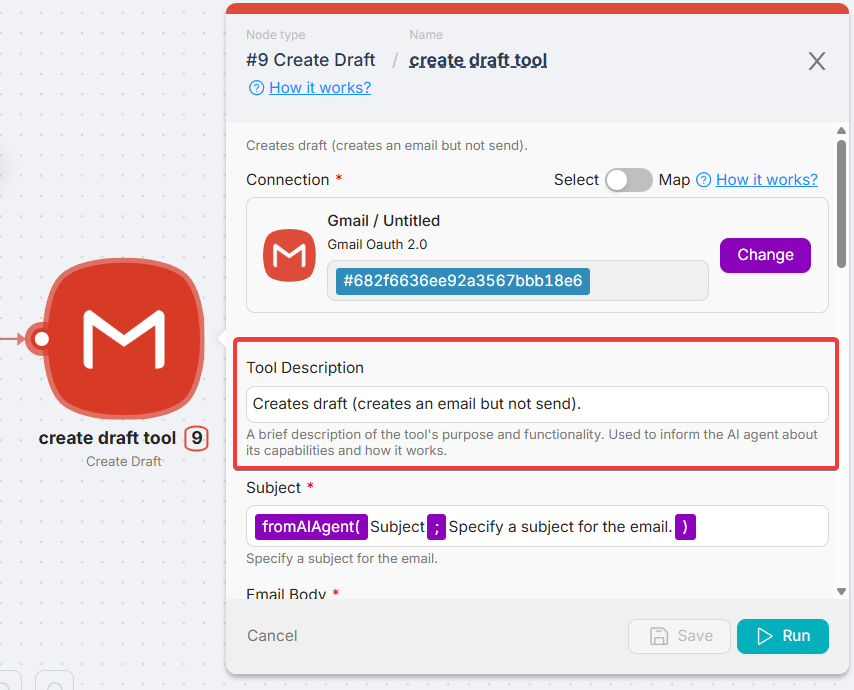
Each tool should include a short description that explains its function. This is used by the agent to decide when (and if) to use it.
📌 The tool description is not just for documentation — it is also passed via API and directly affects how the agent reasons about and chooses to call the tool. A vague or missing description can lead to the tool being ignored or misused.
✅ Good:
create_event_tool: "Creates a new calendar event using title, time, and participant list."
❌ Poor:
"Does stuff with the calendar"
"Test tool"
🔍 Keep descriptions short, specific, and action-oriented. Write them for the agent — not just for humans.
Testing
Always test each tool in isolation before connecting it to an agent. Validate that the tool:
- Executes reliably with real input
- Returns usable results
- Fails gracefully when needed