
Iterating
Iterating means processing a collection (an array or object) one item at a time: the same steps run for each item. In Latenode this is done with the Iterator node: you give it data to iterate over and connect nodes that should run inside the loop.
What is an Iterator
The Iterator is a node that processes selected data sequentially, one element at a time. You can pass a JSON array (iteration over array elements) or a JSON object (iteration over key–value pairs).
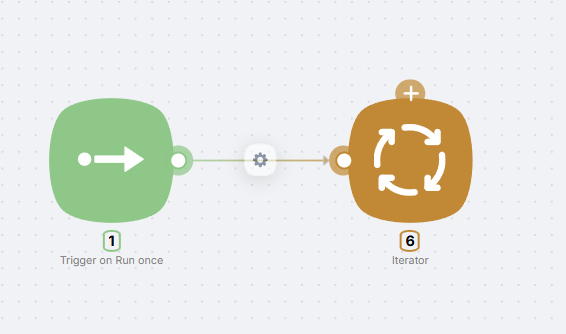
Setup
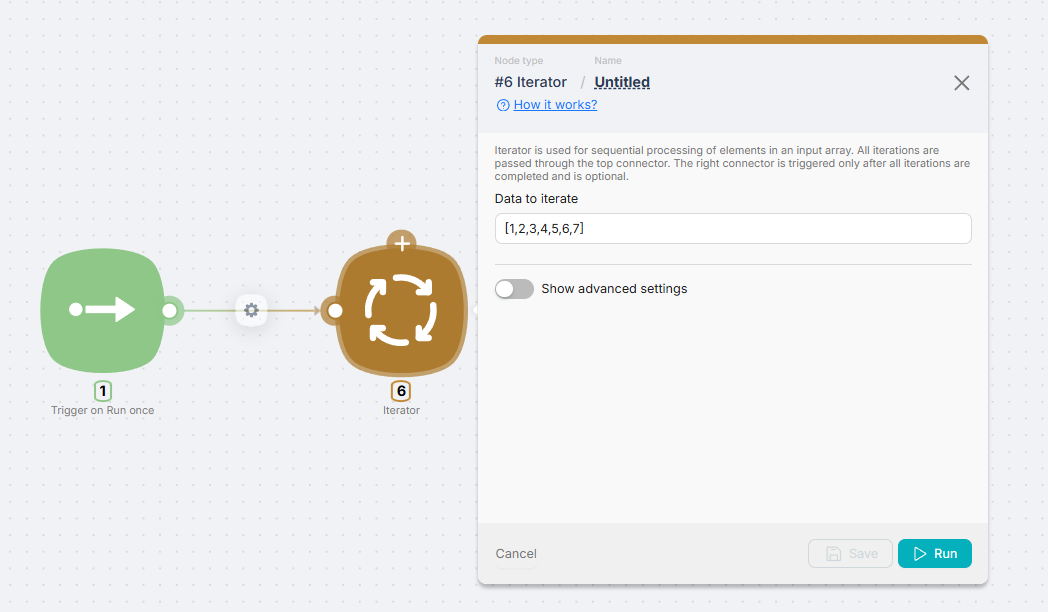
Data to Iterate field
In the node's single configuration field — Data to Iterate — specify the array or object to iterate over. This can come from previous nodes (e.g. {{node.field}}) or be a fixed value.
Top connector (cycle)
Unlike regular nodes, Iterator has an extra connector on top. This is the cycle output: each iteration goes through it. Connect here the nodes that should run for every element — as many times as there are items in the data.
Right connector (after all iterations)
The right connector runs only after all iterations are done. It's optional and is typically used for "when everything is processed" actions — for example, sending a webhook response that data was processed successfully.
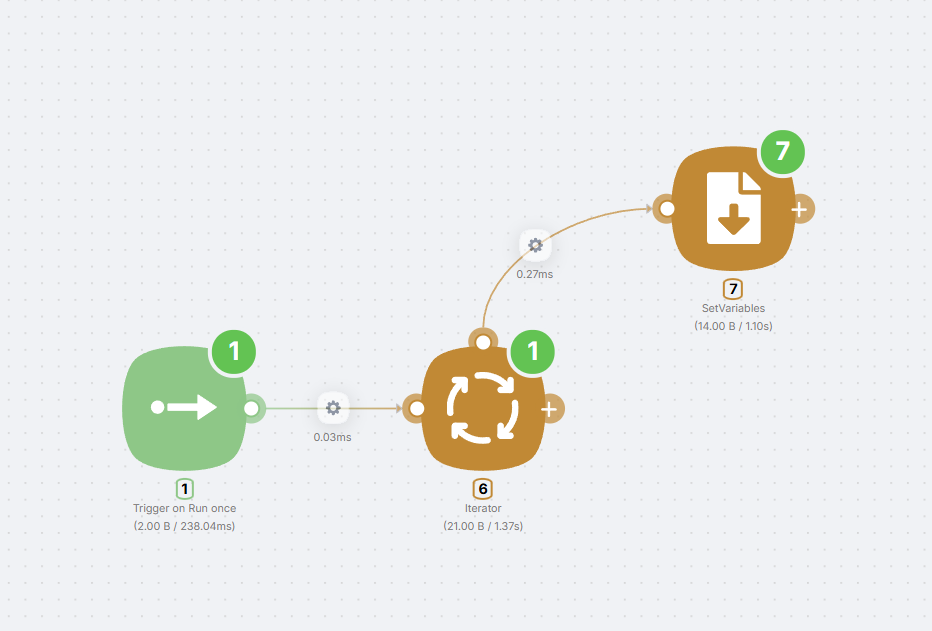
A node connected to the right Iterator connector runs once after the loop. Nodes connected to the top connector run on every iteration.
Example
Common pattern: trigger → data → Iterator → connect a node (e.g. Set Variables or HTTP Request) to the top connector to process one item; connect Webhook Response to the right connector to send the response to the caller after all items are processed.
For more on the node's parameters and examples, see Iterator.
Need Help? Ask the community
If something on this page is missing or unclear, post on the Latenode community forum. Our team and other users usually reply quickly.